Mendoza produces some of the finest red wine on earth. This is not a marketing claim — it is the consensus of the world's most serious wine critics, the conclusion of blind tastings, and the opinion of winemakers from Bordeaux, Napa, and Tuscany who have come here, tasted the conditions, and stayed. The altitude, the diurnal temperature variation, the intensity of Andean sunlight filtered by clean dry air — these are conditions that concentrate flavour in ways that lower-altitude wine regions cannot replicate.
Understanding Mendoza as a wine destination, however, requires understanding that it is not one region but several — with distinct sub-zones, different grape personalities, and completely different visitor experiences depending on where you go and who you visit.
The Two Essential Sub-Regions
Luján de Cuyo is the traditional heartland of Mendoza Malbec. The estates here have the oldest vines — some over a hundred years old, planted by Italian and Spanish immigrants in the early twentieth century — and produce wines of extraordinary depth and complexity. The town of Luján sits at around 900 metres altitude, and the best properties are further up the piedmont, toward the Andes. The Malbec from Luján de Cuyo tends toward power and structure — wines that age, wines that reward patience.
Valle de Uco is where the next generation of Mendoza wine is being made. At altitudes of 1,000 to 1,500 metres, this valley — further south and significantly higher than Luján — produces wines with a different character: more elegance, more freshness, more precision. The boutique producers here, many of them working in small quantities with ancient grape varieties, are producing some of the most interesting wine being made anywhere in the world right now.
Our Wine & Gastronomy experiences are built around both zones, because each reveals a different face of Argentine wine.
The Grapes Worth Knowing
Malbec is the grape Mendoza is known for — a variety that originated in Bordeaux, where it was difficult to ripen and prone to disease, and found in the Andes the conditions it had always been looking for. Argentine Malbec has evolved into something completely distinct from its French ancestor: darker, richer, more approachable young, with violet florals on the nose and a structure that can age beautifully when the wine is made seriously.
Torrontés is the great white grape of Argentina, and almost unknown outside the country. It grows best in the high-altitude valleys of Salta — the Northwest Argentina region — but Mendoza produces good examples. The nose is extraordinarily aromatic — jasmine, rose petal, peach — in a way that can mislead you into expecting sweetness. The palate is dry and fresh. It is unlike any other white wine being made in the world.
Cabernet Franc is the grape that excites Mendoza's most serious winemakers right now. At altitude, Cab Franc develops a complexity and elegance that rivals anything being produced in the Loire Valley. Several boutique producers in Valle de Uco are producing Cabernet Francs that are genuinely extraordinary.
The Difference Between a Tour and a Private Tasting
This is the most important thing to understand before visiting Mendoza. The large, well-known bodegas — the ones that appear in every travel magazine — offer public tastings on a set schedule, in groups, moving through a series of wines at a pace set by the guide rather than by the visitor. The wine is good. The experience is pleasant. It is also interchangeable with dozens of other wine destinations in the world.
A private tasting at a boutique bodega that does not receive walk-in visitors is an entirely different experience. The winemaker or head viticulturist sits with you. The conversation is unhurried. You taste across the range in the order that makes sense for the wine, not for a schedule. The wines poured are not the commercial releases — they are the reserve selections, the experimental barrels, the things that will never appear in an export market. You leave knowing something about wine that you did not know when you arrived.
This is what we arrange for every traveller on our Wine, Lakes & Mountains journey and for anyone visiting Mendoza through Bespoke Argentina.
Best Time to Visit Mendoza
March to May is harvest season — arguably the finest time to be in Mendoza. The vineyards turn gold and amber as the leaves change, the air smells of fermenting grape, and the bodegas are alive with activity. A harvest visit in March or April, including the option to participate in the picking or the crush at a boutique estate, is one of the most memorable experiences we offer.
September to November is spring — the vines are leafing out, the Andes are still snow-capped, and the weather is warm and clear. An excellent window for those who also want to combine Mendoza with outdoor activities.
December to February is summer — hot in the city (temperatures regularly above 35°C) but the vineyard landscapes are at their most lush. Many travellers combine summer Mendoza with Bariloche, arriving in wine country first and then flying over the Andes to the lake district.
Combining Mendoza with the Andes
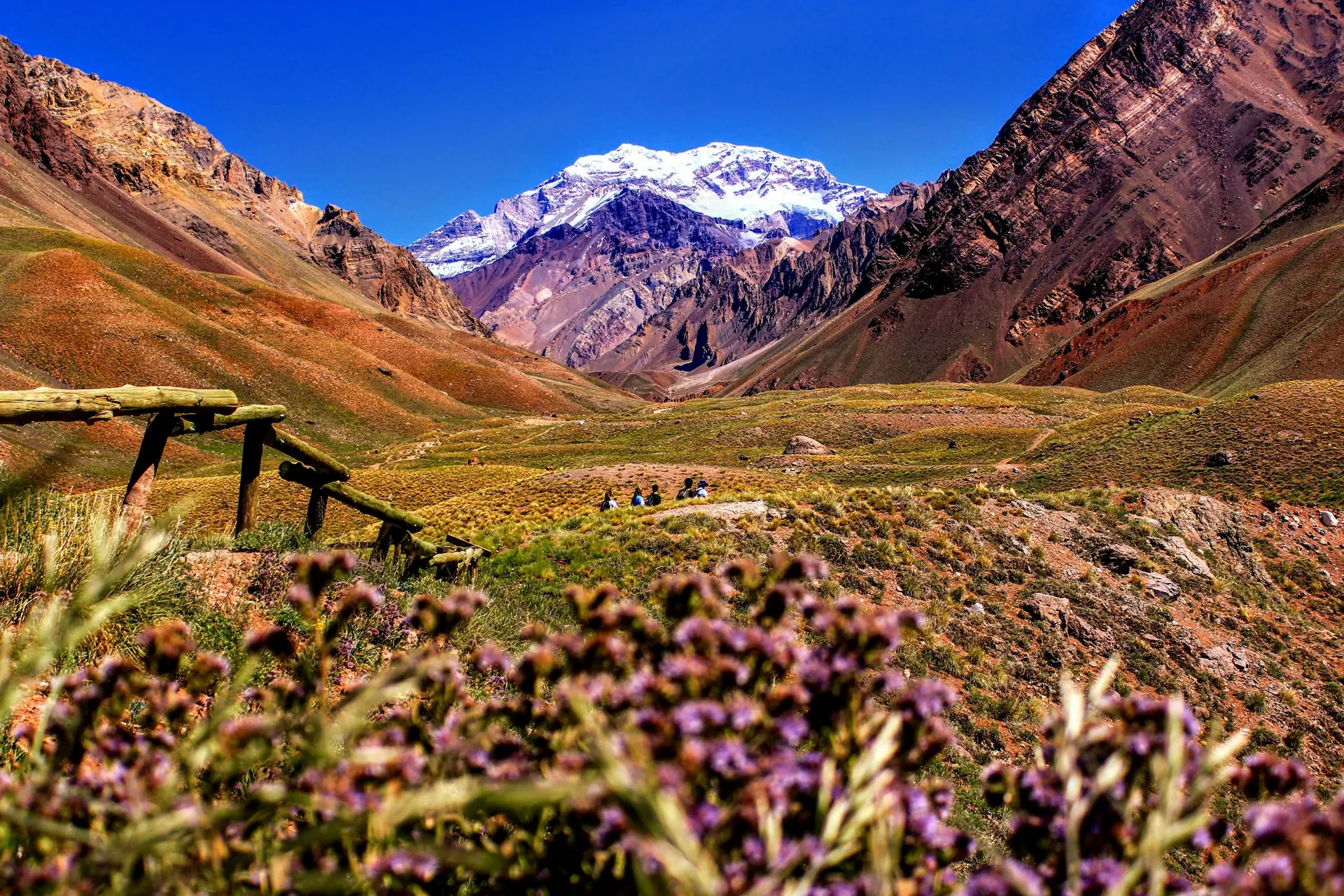
The wine is not the only reason to come to Mendoza. The Andes loom at the edge of the city in a way that dominates the landscape entirely — on clear mornings, Aconcagua (the highest mountain outside Asia, at 6,962 metres) is visible from the city streets. The Andean foothills offer horseback riding, high-altitude trekking, white-water rafting on the Mendoza River, and the thermal springs at Cacheuta, set in a dramatic canyon ninety minutes from the city.
Our wellness and nature experiences in Mendoza incorporate both the wine country and the Andean activities into a single stay.
Related