Northwest Argentina is the country's best-kept travel secret — and among the most visually extraordinary places on the continent. The traveler who arrives in Buenos Aires and flies north to Salta rather than south to Patagonia is making a choice that most of their friends at home will not understand and that they themselves will not regret for a single hour.
This is the Argentina of colonial cities built from rose-pink stone, mountains that shift through fourteen shades of colour depending on the hour, ancient Andean culture that has maintained its rhythms through five centuries of colonial history, and high-altitude landscapes of a silence and scale that feel genuinely otherworldly. It is the Argentina that most international tourists never reach — which is precisely what makes a northwest Argentina vacation so rewarding.
The Essential Northwest Argentina Destinations
Salta city is the gateway — one of the most beautiful colonial cities in South America, set in a fertile valley ringed by the Andes at around 1,200 metres altitude. The rose-pink buildings of the city centre, built from a local stone called cachi, have been preserved with unusual care. The Plaza 9 de Julio, with the cathedral on one side and the Cabildo on the other, is a genuinely beautiful public space. The Museo de Arqueología de Alta Montaña (MAAM) houses the most significant collection of Inca high-altitude artifacts in the world — the discovery that prompted the museum was one of the most important archaeological finds in recent decades.
From Salta, the excursion south to the wine valley of Cafayate is essential. At approximately 1,700 metres altitude, the Cafayate valley produces Argentina's finest Torrontés — an extraordinary white grape that is almost entirely unknown outside the country. The drive through the Quebrada de las Conchas, where the rock formations turn every shade of ochre, red, and purple, is one of the most beautiful road journeys in Argentina.
Jujuy Province and the Quebrada de Humahuaca is the second essential stop on any northwest Argentina vacation. The Quebrada — a narrow mountain valley carved by the Río Grande — is a UNESCO World Heritage Site, recognised for both its extraordinary natural beauty and its pre-Inca and colonial cultural significance. The villages along the Quebrada — Tilcara, Purmamarca, Humahuaca — have maintained traditional Andean market culture through centuries of change.
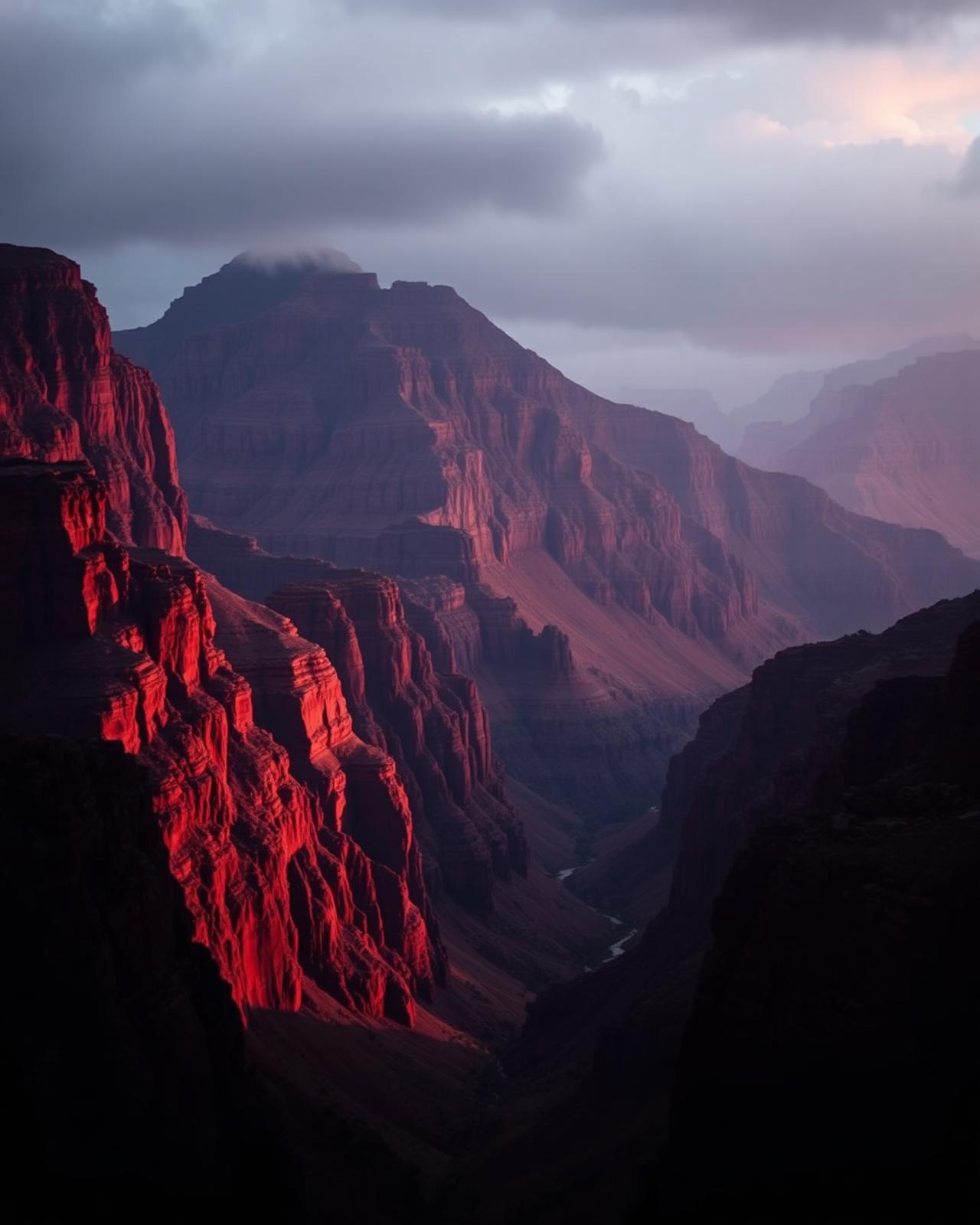
Purmamarca is the village most visitors base themselves in for the Quebrada section. It sits at the foot of the Cerro de los Siete Colores — the Hill of Seven Colors, whose striations of red, green, white, violet, ochre, pink, and grey change with every shift of the light. A dawn visit to the Cerro before other visitors arrive, when the light first hits the colored strata and the village is still quiet, is one of the most beautiful mornings we know of anywhere in Argentina.
The Salinas Grandes are among the most dramatic landscapes in the northwest — vast salt flats at 3,400 metres altitude in the high Puna, where the surface reflects the sky and the flamingo lagoons shimmer at the edges. A 4x4 excursion from Purmamarca to the Salinas takes a full day and passes through some of the most extraordinary high-altitude scenery in South America.
The Tren a las Nubes
The Train to the Clouds — the Tren a las Nubes — is one of Argentina's most famous engineering achievements and one of its most remarkable travel experiences. The journey departs from Salta city and climbs through the Andes to the La Polvorilla viaduct at 4,220 metres altitude — one of the highest railway viaducts in the world. The journey takes approximately sixteen hours and crosses 29 bridges, 21 tunnels, and 13 viaducts. It is not comfortable, it is not fast, and it is not something to skip if you are in Salta with a free day.
We incorporate the Tren a las Nubes into extended northwest Argentina vacations for those who want it. The Northwest Explorer journey covers the essential northwest Argentina vacation in ten nights.
When to Visit Northwest Argentina
April through October is the dry season and the optimal window for a northwest Argentina vacation. The light in April and May, when the dry season has cleared the air but the summer heat has not yet arrived, is extraordinary — the coloured mountains of the Quebrada show their full palette.
June and July are the coolest months and the most dramatic for the high Puna excursions — the salt flats in winter light, with snow on the surrounding Andean peaks, have a quality that summer cannot replicate.
August through October is ideal for the Salta wine country, as the Torrontés harvest season in Cafayate runs from late February through April and the residual activity — the bodegas in the early fermentation phase — continues through June.
Avoid the summer rainy season (November through March) for the Quebrada and Salinas, as flooding can make roads impassable and the landscapes lose their characteristic dryness.
Combining Northwest Argentina with the Rest of the Country
The northwest fits naturally at the beginning of a broader Argentina journey. Flying Buenos Aires to Salta, spending four to five nights in the northwest, and then flying south to Iguazú or east to Buenos Aires for a connection to Patagonia is the natural sequence.
The Grand Argentina journey incorporates five nights in the northwest — two in Salta and three in Purmamarca and the Quebrada — before moving through Iguazú, Mendoza, and the full Patagonian south. For those who want a dedicated northwest vacation, the Northwest Explorer is the right starting point — ten nights that cover the full region without rushing any of it.
Tell us about your northwest Argentina vacation plans and we will design the specific journey around your interests and timing.